the pictures pretty much speak for themselves. the town is beautiful, but there is a disgusting amount of tourists wearing visors and clutching their backpacks to their chests (because they were warned about pick-pockets). never the less, we were remarkably successful at finding our own space, whether it be on the hostel balcony, at a local watering hole (photos to come), or along the rocky coastline at night.
Sunday, July 1, 2007
dubrovnik, croatia
the pictures pretty much speak for themselves. the town is beautiful, but there is a disgusting amount of tourists wearing visors and clutching their backpacks to their chests (because they were warned about pick-pockets). never the less, we were remarkably successful at finding our own space, whether it be on the hostel balcony, at a local watering hole (photos to come), or along the rocky coastline at night.
mostar, bih
we stopped in mostar, bih on our way to dubrovnik, croatia.

rural bosnia is ridiculously beautiful, with forested hills and several rivers that are supposed to be great for rafting. andy and i were going to take an ecotour rafting trip, but it was too expensive.

mostar is famous for its big bridge. built in the 16th century, the bridge survived ottoman and yugoslav rule, only to be destroyed by a retreating croat militia in 1993. the bridge was eventually rebuilt and the old town surrounding the bridge became an UNESCO world heritage site.

the damage from the 92-95 war is even more pronounced in mostar.

whereas in sarajevo, buildings are in the process of being restored or are still liveable, at least 30% of the buildings in mostar are completely unliveable, and it looks like nothing is being done to repair them.

bosnians and croats, as we soon learned, have mad love for tito, the founder and leader of yugoslavia from 1943-1980.
rural bosnia is ridiculously beautiful, with forested hills and several rivers that are supposed to be great for rafting. andy and i were going to take an ecotour rafting trip, but it was too expensive.
mostar is famous for its big bridge. built in the 16th century, the bridge survived ottoman and yugoslav rule, only to be destroyed by a retreating croat militia in 1993. the bridge was eventually rebuilt and the old town surrounding the bridge became an UNESCO world heritage site.
the damage from the 92-95 war is even more pronounced in mostar.
whereas in sarajevo, buildings are in the process of being restored or are still liveable, at least 30% of the buildings in mostar are completely unliveable, and it looks like nothing is being done to repair them.
bosnians and croats, as we soon learned, have mad love for tito, the founder and leader of yugoslavia from 1943-1980.
the siege
from late 1992-1995, Sarajevo was essentially closed off to the outside world. serbs surrounded the entire city, except the airport, which the UN maintained. over three years the city was constantly under attack, and it is disturbing how many remnants from the war still exist.

mortar holes in sidewalks and walls were filled with red resin and are called sarajevo roses.

although the airport was the only link sarajevans had with the outside world, the UN wouldn't let them use the passageway. so sarajevans built a tunnel under the airport into the hills past the Serbian troops.

the family that owned the home that the tunnel started in have since turned it into a museum with photos and video footage of the creation and use of the tunnel. you can also walk through part of the tunnel.

many buildings are missing chunks from mortar explosions, or are riddled with bullet holes.

the Muslim cemetary was expanded, but there still wasn't room for all 11,000 casualties. in parks and futbol fields throughout sarajevo there are small markers where people were burried and haven't yet been transfered to the cemetary.

more evidence of the shelling.
mortar holes in sidewalks and walls were filled with red resin and are called sarajevo roses.
although the airport was the only link sarajevans had with the outside world, the UN wouldn't let them use the passageway. so sarajevans built a tunnel under the airport into the hills past the Serbian troops.
the family that owned the home that the tunnel started in have since turned it into a museum with photos and video footage of the creation and use of the tunnel. you can also walk through part of the tunnel.
many buildings are missing chunks from mortar explosions, or are riddled with bullet holes.
the Muslim cemetary was expanded, but there still wasn't room for all 11,000 casualties. in parks and futbol fields throughout sarajevo there are small markers where people were burried and haven't yet been transfered to the cemetary.
more evidence of the shelling.
Saturday, June 23, 2007
sarajevo, bih
the hills of outer sarajevo, the capital of bosnia and herzegovina.
there was a war in bih fron 92-95 and there are remnants all over the city. it's actually quite surprising how devastated the city still looks.
foreground: ottoman cemetary. background: the ˝lucky˝ casualties of the war, the ones who were burried in the cemetary, instead of neighborhood parks and football fields.
the latin bridge, where franz ferdinand was shot
random apartment buildings in the city center.
'bosnian' coffee, served in the turkish district with turkish delight on the side.
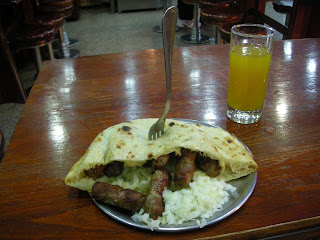
cevapcici (pronounced sevapchi-chi) is more meat than one could imagine eating, traditional bosnian food.
this pizza is amazing and has essentially become a sarajevo tradition for anyone who visits, just after we ordered our pizzas the crowds appeared and didn't leave all night
amazing salad, perhaps not traditional bosnian food, but worthy of note anyway
Tuesday, June 19, 2007
the rest of istanbul
1: andy and attaturk 2: the strays are remarkably healthy 3/4: galata district 5: istiklal cadesi, a major semi-pedestrian street 6: sultahnamet from the ferry 7: spices and tea at the egyptian market 8: street cleaning in eminonu district 9/10: view of sultahnamet and attaturk bridge from the hostel terrace
Saturday, June 16, 2007
sultahnamet
most of the tourist attractions are located in sultahnamet. unfortunately, it seems someone came around and standardized all of the prices, because everything cost 10 ytl (new turkish lira), regardless of how important historically it was or how much time you could spend there. the only thing we paid to see was the ayasofya.

the ayasofya was a 5th century byzantine cathedral, converted into a mosque during the ottoman empire. because of this, you see the arabic script acceptable in mosques with old frescos and icons.

just across the way was the blue mosque, one of the largest (of many) in istanbul.

the mosque got its name from the blue patterned tiles.


both men and women had to have their legs covered to the ankle and enter bear foot, and women were required to have their heads covered. nevertheless, there were tons of disrespectful tourists who mocked the dress or simply took their headscars off the minute they entered. this didn't happen at the mosques outside of sultahnamet, touristy locations ruin everything.
before prayer, muslims must wash their feet.

blue mosque from a distance
the ayasofya was a 5th century byzantine cathedral, converted into a mosque during the ottoman empire. because of this, you see the arabic script acceptable in mosques with old frescos and icons.
just across the way was the blue mosque, one of the largest (of many) in istanbul.
the mosque got its name from the blue patterned tiles.
both men and women had to have their legs covered to the ankle and enter bear foot, and women were required to have their heads covered. nevertheless, there were tons of disrespectful tourists who mocked the dress or simply took their headscars off the minute they entered. this didn't happen at the mosques outside of sultahnamet, touristy locations ruin everything.
before prayer, muslims must wash their feet.
blue mosque from a distance
Sunday, June 10, 2007
what about bob?
as i recall, you were going to go to turkey with the peace corps. that didn't happen, but i just wanted to let you know what you were missing; and i think it would be bad ass if you and momma moved to istanbul.

this could be you, bob, bathing in the bospherous.

andy thinks small-boat culture isn't that big here, but you could still make do.

you could be napping in this boat, bob. you could be rocked to sleep and not even care that you have this amazing view of the levent business district, because you get to see it every day.

you could smoke copious amounts of cheap cigarettes while drinking concentrated caffeine in the form of turkish coffee in small cafes along the water.

and, if you're lucky, you could have your very own muslim daughter!
this could be you, bob, bathing in the bospherous.
andy thinks small-boat culture isn't that big here, but you could still make do.
you could be napping in this boat, bob. you could be rocked to sleep and not even care that you have this amazing view of the levent business district, because you get to see it every day.
you could smoke copious amounts of cheap cigarettes while drinking concentrated caffeine in the form of turkish coffee in small cafes along the water.
and, if you're lucky, you could have your very own muslim daughter!
Subscribe to:
Posts (Atom)